Trail Ledger is reader-supported; when you buy through our links, we may earn an affiliate commission at no extra cost to you. How Trail Ledger earns referral income
Sleeping directly on the ground is often the quickest way to end up with sore hips, stiff shoulders, and a damp sleeping bag. Elevating your bed on a camping cot solves uneven terrain and jagged roots instantly. It also makes sitting up in your tent as effortless as getting off a regular bed at home, while opening up precious gear storage underneath your sleeping surface.
Yet bringing a cot into a tent introduces its own set of trade-offs: weight, bulky packed sizes, mechanical setup tension, and surprising cold-weather dynamics. Understanding how cot frames interact with tent walls and nighttime temperatures ensures you invest in gear that actually improves your camp rest rather than cluttering your vehicle.
The Mechanics of Cot Comfort: Width, Height, and Usable Space
A camping cot relies on taut fabric stretched across longitudinal side poles, held in place by transverse legs. While this tension creates a supportive, sagging-free sleep platform, the structural architecture dictates whether you will actually rest well.
- Total Width vs. Usable Sleeping Width: Budget and ultralight cots frequently advertise standard widths between 60 cm and 68 cm (about 23 to 26 inches). Remember that side rails sit right against the fabric edge. If you are broad-shouldered or sleep on your side with bent knees, your limbs will press against rigid aluminum or steel tubing. A width of 70 cm to 80 cm offers substantially more elbow room, preventing rail bite during restless nights.
- Ground Clearance and Tent Wall Angles: Cots generally fall into two height profiles: low-slung ultralight platforms (typically 12 cm to 18 cm off the ground) and elevated camp cots (ranging from 35 cm to 45 cm high). In a compact dome tent with sharply sloped walls, a high cot pushes your head and sleeping bag directly into the condensation-prone ceiling mesh or fly. Elevated cots belong in tall cabin tents; low-profile cots belong in backpacking shelters and low domes.
- End-Bar Elimination: Traditional military-style cots feature crossbars across the head and foot ends that require brute force to lever into place and can hit your head or heels at night. Modern tension-leg designs suspend the fabric entirely between two side rails, leaving both ends completely open for full usable body length.
Sleeping elevated exposes the underside of your cot to continuous air circulation. While this breeze provides natural cooling during muggy summer outings, temperatures dipping below 15°C (60°F) will cause cold air underneath to pull body heat away through compressed sleeping bag insulation. To stay warm in shoulder seasons, pair your cot with an insulated pad. Review our guide on how to choose a camping mattress to select an appropriate R-value pad that acts as a thermal barrier between you and the cot deck.
Evaluating Marketplace Cot Options
Campers browsing online listings will encounter varying combinations of frame geometry, fabric weights, and modular legs. Below, we examine four common market listings, detailing their advertised parameters, functional formats, and key questions to ask sellers before ordering.
Extra-Wide and Tall Platforms: Sonuto 210×80cm Camp Bed
For car campers who prioritize generous sprawling space over minimal carry weight, cots built around wide dimensions provide home-like support. Pushing the width to 80 cm allows side sleepers and taller individuals to turn freely without touching rigid frame tubing.
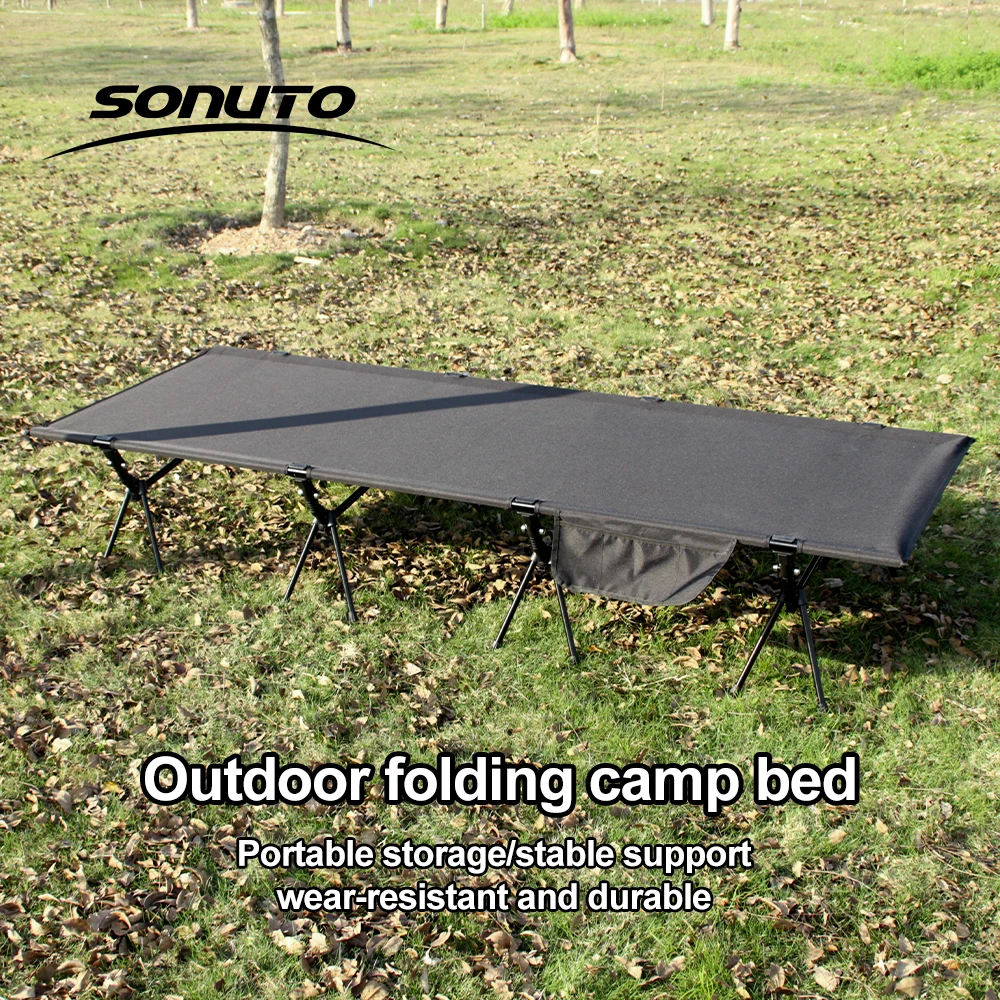
The Sonuto listing advertises an expansive 210×80 cm footprint fabricated from heavy 600D Oxford cloth, with an advertised total weight of approximately 4 kg and an integrated hanging side organizer pouch. Its tall multi-leg structure lifts the bed well off the ground, maximizing under-bed gear storage. However, its substantial length and height demand a tent with vertical side walls, such as a family cabin tent or large outfitter canvas shelter.
- Check whether the leg assembly includes protective rubber caps or wide feet to prevent point-loading punctures in your tent floor.
- Confirm the exact packed bag dimensions to ensure it fits across your vehicle's cargo area.
Ultralight Dual-Height Convertible: WESTTUNE Folding Cot
Convertible cots use segmented leg designs where extension rods snap into the base brackets. This lets you switch between a low-clearance setup for dome tents and a raised bench profile for taller shelters or sitting around camp.
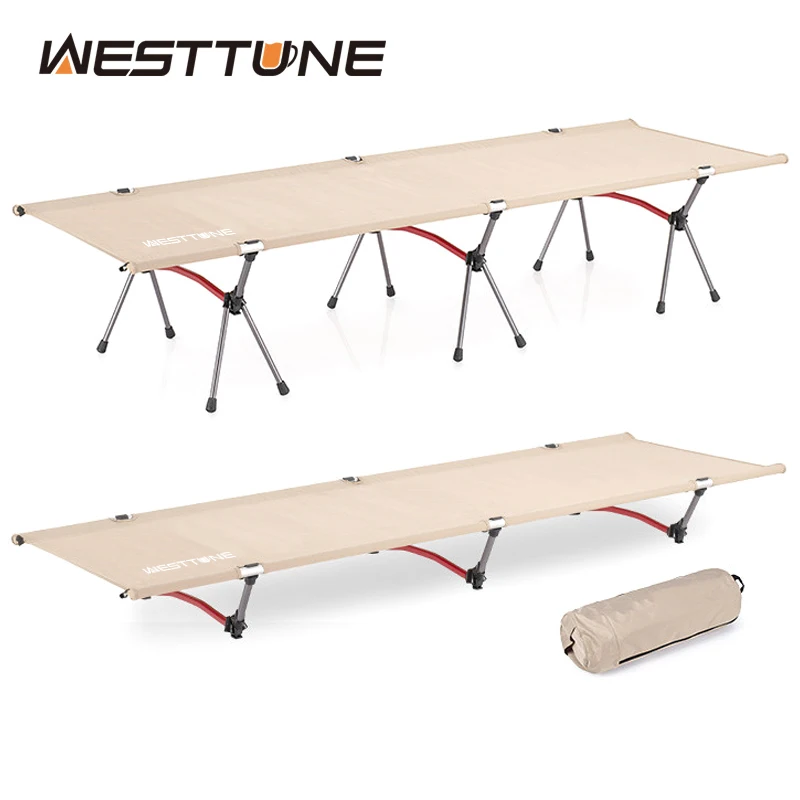
The WESTTUNE listing highlights an aluminum alloy frame with curved cross-tension spreaders and modular leg extenders. A convertible format gives you the flexibility to shed weight by leaving the extenders at home during quick trips or keeping them on when you prefer a high-profile bed in base camp. Note that ultralight alloy joints require careful alignment during lever-clamping so you do not warp the cross-members under tension.
- Inquire whether the leg extender rods are included in the advertised price or sold as an optional variant kit.
- Ask the seller for the manufacturer's rated maximum static weight capacity in kilograms or pounds.
Low-Profile Tent Beds: Compact Lever-Lock Frames
When packing volume matters most, low-profile cots eliminate tall extension legs entirely. By sitting 12 to 15 cm off the ground, these beds slip cleanly beneath the angled walls of two- and three-person backpacking tents without crowding the overhead ceiling.
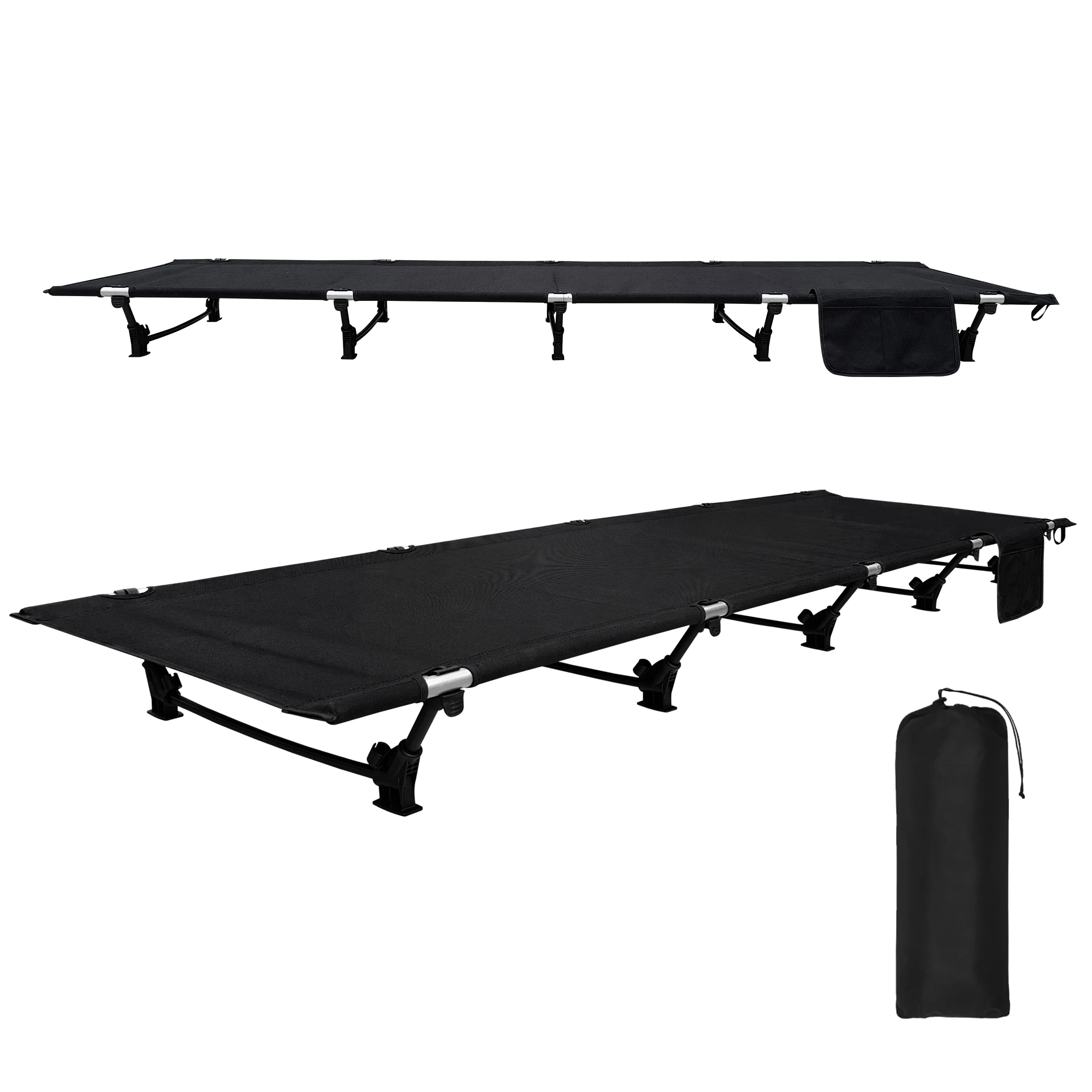
The LIFEWITHCAMP model pictured above features a low five-arch tension layout and a side storage pocket, accompanied by a compact stuff sack. Its low center of gravity keeps the frame remarkably stable, eliminating the sway sometimes felt on tall folding cots. Because low cots offer limited clearance beneath the bed, gear storage is minimal, but you gain ample overhead head clearance inside cramped dome shelters.
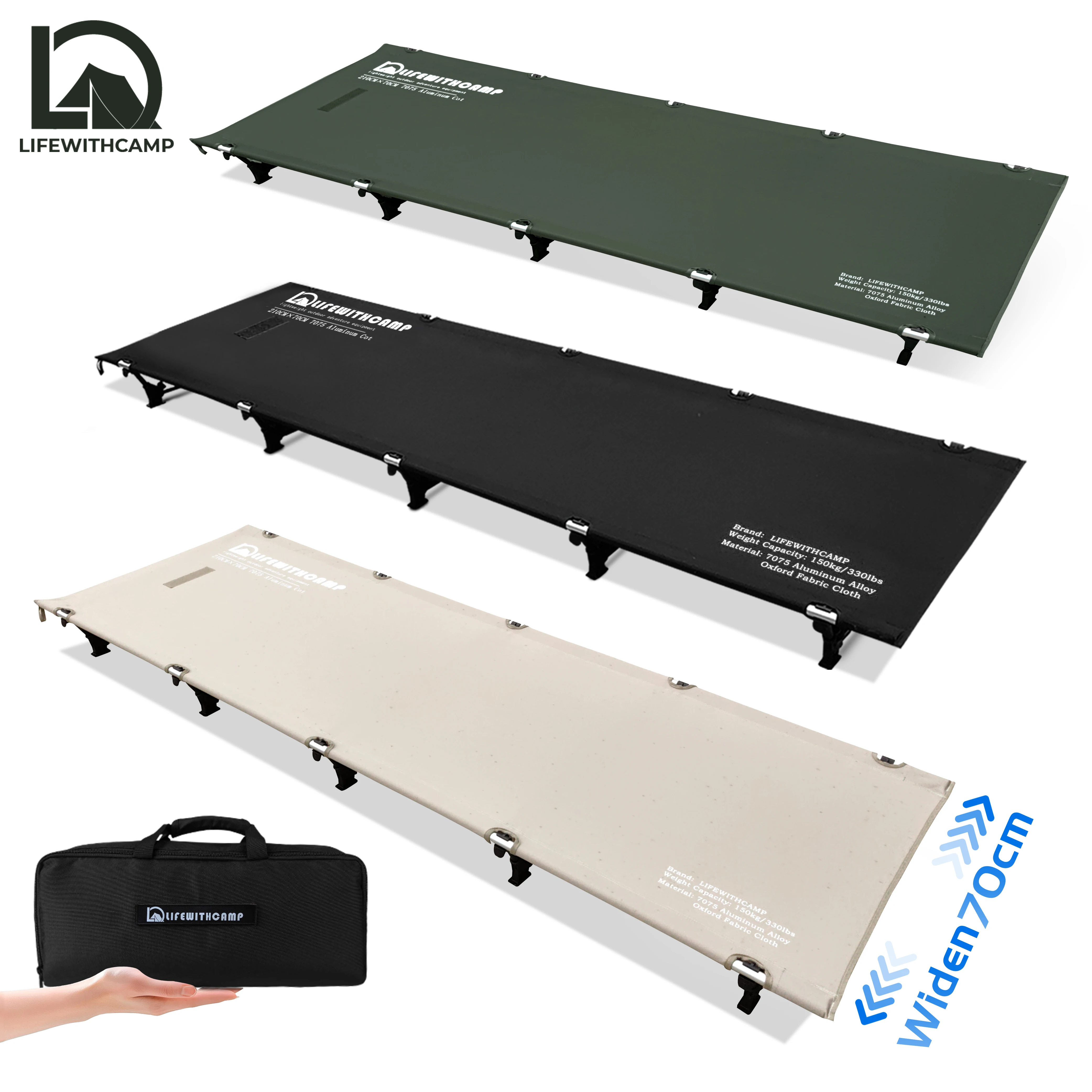
The 70cm wide cot variant offered via Stone's Store displays LIFEWITHCAMP markings on the fabric, advertising an expanded 70 cm sleeping width, 7075 aluminum alloy tubing, and an advertised 150 kg (330 lb) weight rating. The additional width bridges the gap between narrow ultralight designs and car-camping comfort, making it a well-balanced option for campers who desire elbow room without carrying excess frame bulk.
- Verify the lever-lock mechanism design: some use squeeze-clamps that require hand strength to lock and release tension, while others use push-pins.
- Confirm the fabric density (such as 300D, 420D, or 600D Oxford) to ensure long-term resistance to stretching.
Feature Comparison: Cot Styles at a Glance
| Cot Category | Typical Weight | Ground Height | Best Shelter Fit | Key Trade-Off |
|---|---|---|---|---|
| Low-Profile Ultralight | 1.8 – 3.0 kg | 12 – 18 cm | Dome tents, low-ceiling shelters | Negligible gear storage underneath; sitting down requires a low squat. |
| Convertible High/Low | 2.8 – 4.0 kg | 15 cm or 38 cm | Adaptable across dome and cabin tents | Extra modular leg pieces to pack, track, and assemble. |
| Wide Car-Camping Cot | 4.0 – 9.0 kg | 35 – 45 cm | Cabin tents, wall tents, screen shelters | Heavy packed bulk; consumes significant floor and vehicle space. |
Tent Protection and Field Maintenance
A cot focuses substantial body weight onto small contact points. Without proper precautions, those pressure points can damage modern tent floors.
- Distribute the Footprint Load: Thin tent bathtubs made of 68D polyester or 40D nylon can abrade or puncture against hard plastic cot feet on gravel surfaces. Cut small squares of foam puzzle matting, coaster rubber, or durable floor protectors to place under each foot.
- Keep Frame Clear of Tent Walls: Never pitch a cot flush against the outer fabric of your tent. If your sleeping bag or cot fabric touches the rainfly, moisture from condensation will wick directly into your bedding during chilly mornings.
- Inspect Leg Joints for Grit: When breaking camp on sandy or dusty ground, wipe clean all aluminum lever clips and spreader poles before packing them into their carry bag. Fine grit embedded in locking cams can wear down anodized coatings and compromise structural locking tension over time.
By measuring your tent's interior floor plan and sloped roof lines before buying, you can balance the sleeping width you want against the clearance your shelter actually allows—keeping you elevated, dry, and well-rested wherever you pitch camp.