Trail Ledger is reader-supported; when you buy through our links, we may earn an affiliate commission at no extra cost to you. How Trail Ledger earns referral income
A good night outdoors depends far more on what sits under your sleeping bag than what covers you. When you lie on the ground, your body weight compresses sleeping bag fill, leaving the mattress to handle two critical tasks: cushioning your pressure points against uneven ground and insulating your core from cold earth. Choosing the right camping mattress comes down to balancing three factors: how you sleep, how much gear weight you can carry, and nighttime ground temperatures.
- Backpackers and trekkers: Prioritize packed volume, sub-2-pound weight, and verifiable thermal insulation ratings.
- Side sleepers: Look for at least 3 to 4 inches of inflated loft so hips and shoulders do not contact the hard soil when shifting.
- Vehicle and car campers: Opt for broader dimensions, extra thickness, or double-wide footprints where pack volume is not a bottleneck.
Understanding Mattress Types: Air Pads vs. Thick Foam Mats
Camping pads generally fall into three structural categories, each catering to different camp configurations:
- Ultralight Air Chambers: Constructed from sealed ripstop fabrics welded into baffles or cells. They pack down to the size of a water bottle and offer minimal trail weight, but rely entirely on internal air baffles or reflective films to manage heat loss.
- High-Loft Cushioned Pads (3 to 4 Inches): Designed primarily for comfort, these provide substantial separation from tree roots, stones, and packed soil. They allow lower internal pressure, giving side sleepers the cradling effect needed to avoid hip pain.
- Double-Wide Platforms: Sized to fit two sleepers across a shared tent floor or vehicle cargo bed, reducing cold drafts between individual pads and keeping gear consolidated.
As independent testing from OutdoorGearLab's camping mattress evaluations notes, high-loft mattresses excel at cushioning and ease of use around car camps, but extra thickness inherently increases rolled bulk and deflation effort. Understanding your transport limits before purchasing keeps you from hauling an unmanageable pack to the campsite.
Evaluating Warmth: What Does R-Value Mean?
A thick mattress is not automatically a warm mattress. Cold ground absorbs body heat through conduction significantly faster than surrounding air. In outdoor gear, thermal resistance is measured as an R-value, with standardized laboratory measurement procedures codified under ASTM F3340. An uninsulated air mattress circulates cold air inside its chambers, which can leave you shivering even on a mild 50°F (10°C) night.
| Stated R-Value | Target Season | Ground Conditions | Typical Construction |
|---|---|---|---|
| 1.0 – 2.0 | Warm Summer | Dry, warm dirt or sandy ground above 60°F (15°C) | Single-layer hollow air tubes without insulation |
| 2.1 – 3.5 | 3-Season (Late Spring to Early Autumn) | Cool damp ground down to roughly freezing (32°F / 0°C) | Reflective interior films or light synthetic fill |
| 3.6 – 5.0+ | Late Autumn & Cold Weather | Frozen turf, frosted soil, or chilly shoulder seasons | Dense thermal layers, multi-chamber films, or open-cell foam |
When shopping online marketplace listings, seller titles often quote figures like "4.6 High R-Value" as part of promotional copy. Unless a listing explicitly confirms testing under the ASTM standard, treat nominal R-value figures as unverified manufacturer claims rather than certified field performance. For freezing temperatures, always verify pad construction details with the seller.
Comparing Current Camping Mattress Options
To see how these design styles translate into real choices, we examined five marketplace options spanning ultralight backpacking formats, thick cushioned mats, shared pads, and inflation accessories.
1. Naturehike Ultralight High R-Value Air Sleeping Pad
This air pad targets backpackers and three-season hikers who demand compact packing without sacrificing ground insulation. The listing advertises a 4.6 R-value rating in an ultralight folding form factor, making it suitable for cool mountain nights if those thermal barrier claims hold up under trail conditions.
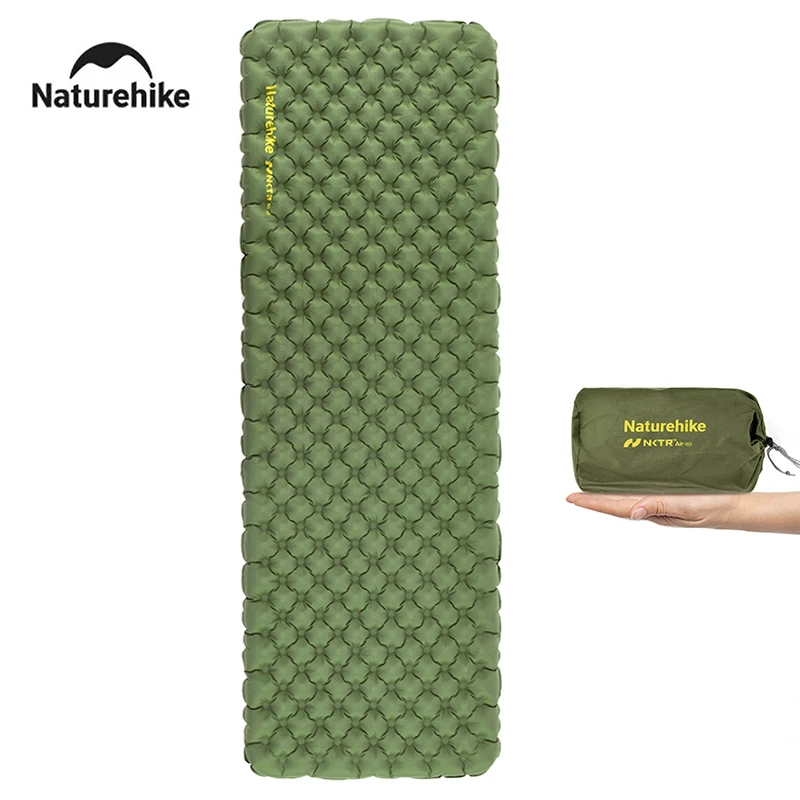
Because its dimpled air lattice prioritizes low weight and compact storage, campers should inspect the outer fabric denier. Lightweight air pads require careful ground clearing to ensure sharp pine needles or gravel do not cause punctures.
2. Extra Thick 4-Inch Camping Sleeping Pad
For side sleepers and vehicle campers who find slim pads too rigid, this 4-inch high-loft pad provides substantial clearance above hard ground. The advertised listing highlights a spliceable design, allowing compatible units to button together side-by-side.
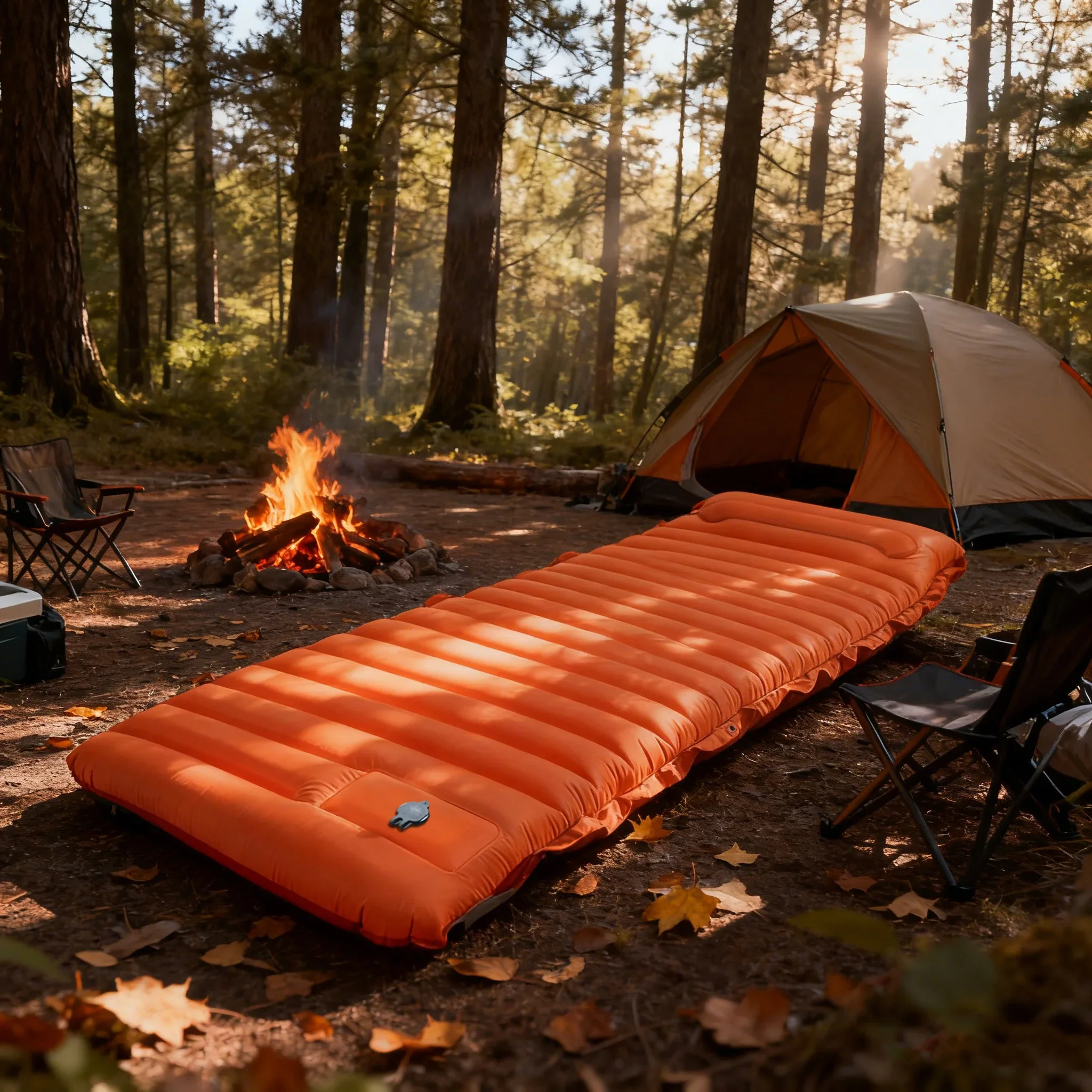
While the extra loft cushions pressure points and supports natural alignment, four inches of internal air volume demands significantly more time and breath to inflate manually. Buyers should check the valve format to see whether an integrated foot sponge or external pump is required.
3. Outdoor Camping Double Inflatable Mattress
Couples and family campers often struggle with individual sleeping pads sliding apart during the night, leaving an uncomfortable gap where cold drafts enter. This double-wide inflatable mattress spans tent floors or the back of midsize SUVs, providing a single uniform surface.
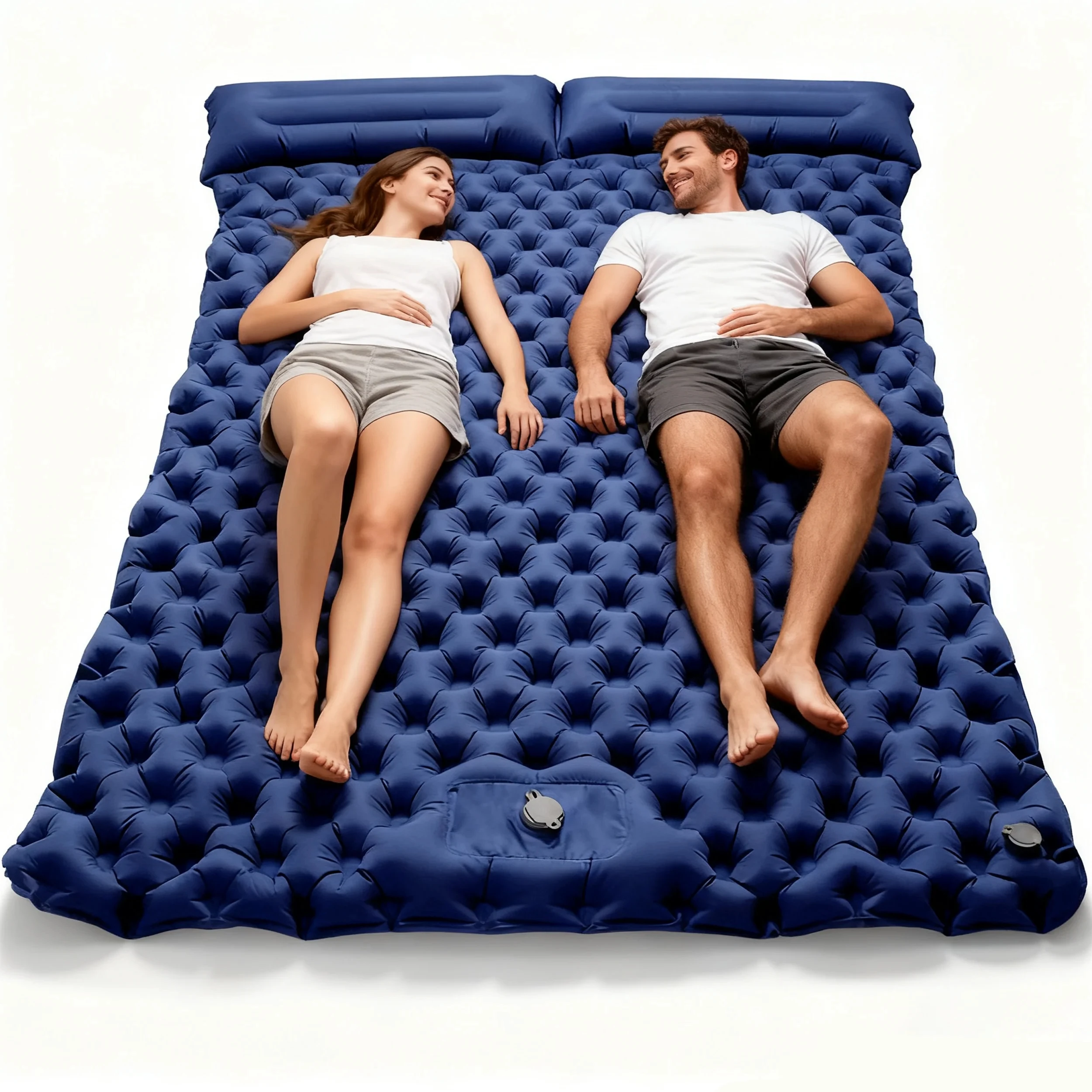
Double air beds carry distinct trade-offs: motion transfer between two sleepers can be noticeable across continuous air chambers, and packing a double pad requires substantial luggage room. Measure your tent's interior floor dimensions carefully against the seller's stated width before ordering.
4. TARKA Inflatable Camping Mat with Integrated Pillow
The TARKA mat is tailored for casual weekend trips, short hikes, and park outings where budget and convenience matter. It features an integrated raised pillow contour, eliminating the need to pack a separate camp cushion.
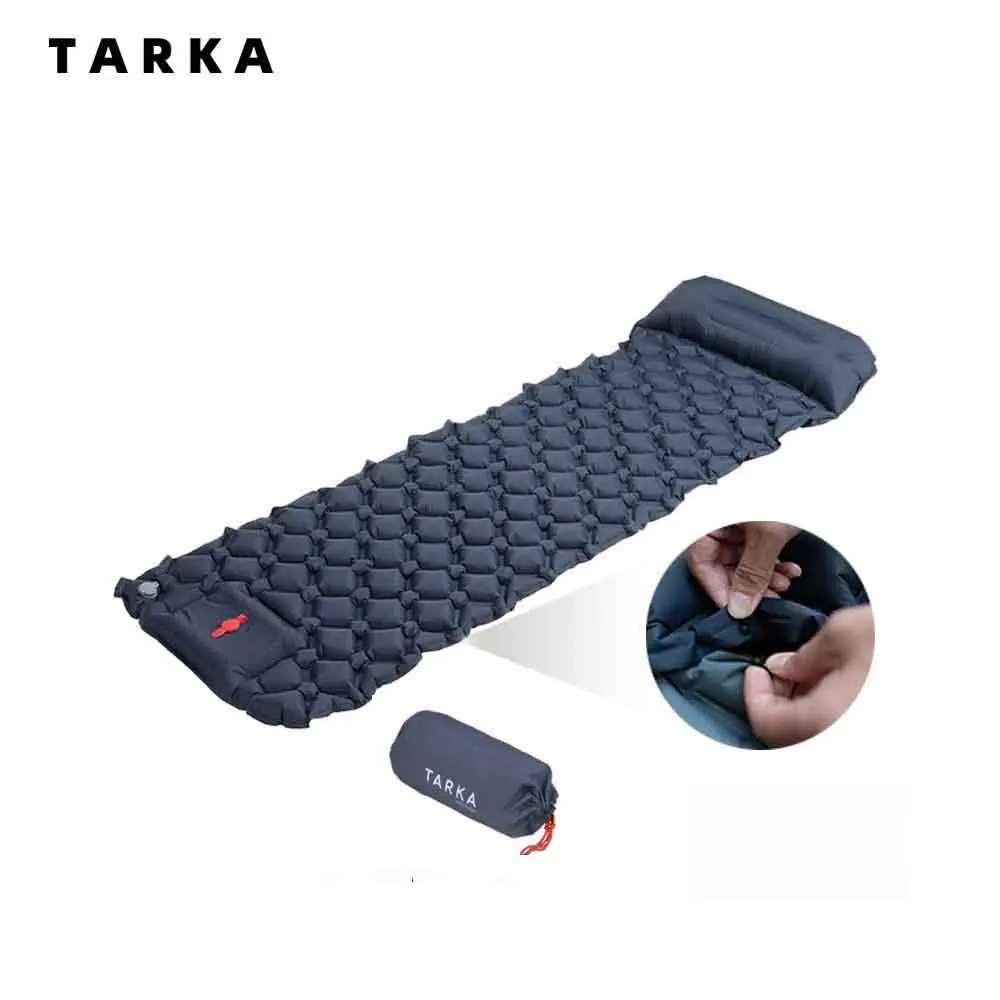
The integrated pillow structure fixes head height at a preset elevation, which suits some back sleepers but may feel awkward for campers who prefer flat sleeping profiles or dedicated ergonomic pillows. Verify whether the pad relies on an internal valve or an air-bag pump before heading out.
5. Supporting Gear: Mini Portable 1200mAh USB Rechargeable Air Pump
High-volume air pads and double mattresses take significant lung power to inflate, which also introduces warm moisture into the mattress baffles. Over time, internal condensation can promote mold growth and degrade interior coatings. A micro-pump offers a hands-free alternative that doubles as a deflation tool to squeeze out stubborn air pockets when packing up.

Because air pad valves vary widely across manufacturers (including flat silicone flaps, screw-threads, and push-pull stems), verify that any micro-pump comes with matching nozzle adapters compatible with your pad's intake port.
Pre-Purchase Verification Checklist
Before finalizing your choice, ask these practical questions to avoid surprises at camp:
- What is the actual packed weight and cylinder size? A listing may call a pad "ultralight," but genuine trail-friendly pads typically weigh under 25 ounces (700g). If you are car camping, extra weight is fine, but packed dimensions still matter for trunk space.
- How does inflation work? Listing titles frequently mix terms like "self-inflating" (which traditionally implies an internal expanding open-cell foam core) with manual air beds featuring built-in foot-press pumps. Review seller photos to confirm whether it requires foot stomping, breath inflation, or an external pump sack.
- Does the package include a field repair kit? Even heavy-duty nylon can puncture on flint or thorns. Check whether adhesive patches or self-stick TPU swatches come in the stuff sack.
- Are the dimensions measured flat or inflated? Many budget pad specifications list raw fabric cut sizes before inflation. An inflated pad often loses 2 to 3 inches in length and width as the air chambers expand vertically.
Field Care and Longevity
To preserve airtight seals and prevent seam failures, follow the exact manufacturer guidelines included with your product. Store inflatable pads loosely rolled with valves open in a dry, temperate space when not in use. Avoid leaving fully pressurized pads inside a locked, sunlit tent or hot car, as expanding air pressure can rupture heat-welded seams.